
Good Skin Takes Time: Why Recovery is So Important
I had an idea that I wanted to highlight this important part of skincare that is just as important as the items we use and the treatments we receive.
Our skin is always working to renew and repair itself. And whether we're trying to clear a deep pimple, improve our complexion or texture, or recover from a professional treatment, there are natural processes that take time. No matter how effective a product or treatment may be, we can't completely skip or rush the healing process. And trying to rush this process can do more harm than good.
A Skin Cycle Explained
Our skin is the body's largest organ; it performs many important functions. We have over a trillion skin cells, closer to 2 trillion, actually! And each skin cell has a life cycle.
Why is a skin cell life cycle important for us to understand? Because so much of skincare is focused on cell turnover, removing dead surface cells, and renewing skin. But our skin cycle is a natural cycle that we must understand and respect, because no matter what skincare, devices, or treatments your skin still has to go through this natural process.
Scrub me secret: ingredients like retinol, AHAs, BHAs, and other skincare products have the ability to increase cell turnover and eat away dead surface cells. But it’s important to remember that even though the process of a cell shedding and renewing is sped up a bit, it still won’t happen overnight. We still have to wait for our skin to go through its natural cycle. And using more of a product or more often than recommended won’t make it work faster; you’ll just damage your skin barrier.

A skin cycle refers to the life and death of a skin cell, and many skin cells are cycling at once. The life of a skin cell starts in the base layer of our epidermis, and as the skin cell gets older, it travels up through the other 3 layers of the epidermis and finally to the surface of the skin. Early in life, this cycle takes about 3 weeks or less. In our early 20s, the cycle starts to slow down a little bit, averaging around every 4 weeks. When we reach our 40s, the natural skin cycle slows down even more and will continue to slow as we age. When this skin life cycle process slows down, more dead skin cells can accumulate on the surface, and skin can become dull, dry, and rough. Less circulation and nutrient flow occur as a result of this slowed life cycle. These are reasons skin starts to look “older”.
This is why in our late 20s, 30s, and beyond, we like to use ingredients that help boost cell turnover and remove dead surface cells. As we age, our skin cycle slows down, and we can’t fight that, but we can use skincare to help our cells function more as they did earlier in life.
scrub me secret: now that you understand the natural skin cycle, you can see why people who are under the age of 24 don’t need retinol, AHAs, or other exfoliants that increase cell turnover. Because when you are young, your skin is naturally making and shedding new cells at a fast and healthy rate. There is no need to mess with a good thing! At this age, your main focus would be keeping skin clean while caring for your barrier and protecting your skin.
Things that slow down the skin cycle process:
UV damage
Loss of elasticity
Smoking, alcohol use, drug use
Sleep deprivation
Poor nutrition (eating fast food / processed food)
Chronic stress
Illness that causes a lot of inflammation
Life Cycle Of a Deep Pimple
A large, deep, or cystic pimple has a life cycle of its own. This is important to understand, just like a skin cycle, because then we can better understand how our products work for us and what we can realistically expect. Because no matter what, your deep pimple is going to go through the cycle, and we just have to support our skin as best we can.

What happens first is that a pimple starts to form deep in a follicle (each of our pores contains a follicle and an oil gland). Oil and dead cells start to accumulate deep in a follicle and cause bacteria to build up. These bacteria are trapped and begin to breed; this is where the follicle wall can rupture underneath your skin, causing the breakout to grow and become inflamed. Inflammation comes from white blood cells traveling to fight the bacteria; thats how the spot gets red and puffy. Without the use of any skincare treatments or products, our body will eventually clear this debris, and inflammation will reduce. A leftover mark called post-inflammatory pigment might linger for 1-2 weeks.
Certain skincare items/treatments that control oil production, fight bacteria, reduce dead skin cell buildup, and reduce inflammation help treat pimples and combat new ones that are beginning to form. Ideally, we want to control that excess oil and dead cell buildup that causes the bacteria in the pore. Thats how we control breakouts from the root.
Scrub me secret: hormonal fluctuations can trigger excess oil buildup in the pores; certain foods and fast food can trigger this excess oil buildup as well. Those are factors that trigger a breakout to start from within. Surface things like sweat, environmental debris, surface oils, and certain products can build up and clog the pore, causing a breakout. Breakouts that start from within can sometimes never come to a head, or they will be a painful large whitehead; clogged pores are usually a whitehead or blackhead.
Why Correct Recovery is Key When it Comes to Skincare & Treatments
Now that we have learned about the life and death of a skin cell and the cycle of a pimple (how it forms + what happens after), we can talk about how exfoliation, cell turnover ingredients, and tissue-stimulating treatments work to improve these operations in our skin. And also how they can impair and damage our skin if used incorrectly.
These products and treatments I’m listing below help your skin ONLY if you let it recover properly.
AHA’s and BHA’s - chemical exfoliation
AHA stands for alpha hydroxy acids; common examples are lactic acid and glycolic acid. These ingredients eat away dead surface cells and give skin tissues proper stimulation that helps skin to look brighter and smoother. BHA stands for beta hydroxy acid; a common one is salicylic acid. BHA’s control oil while breaking down dead, built-up cells. Using a chemical exfoliant sparingly (a few times a week or less) helps remove dead surface cells and reduce/prevent buildup while making skin healthier and brighter. BUT overuse of these products can cause the skin to be overly dry, sensitive, and unbalanced. Our skin needs time to process and repair after exfoliation; that's why I don’t recommend daily exfoliation.
Retinoids - for cell turnover
Retinoid is actually an umbrella term for vitamin A-rich products like retinol, retinoic acid, and retinal. Vitamin A products are products used to accelerate cell turnover for skin health (because remember this cell turnover process slows as we get into our late 20s and older), and these cell turnover properties also help to reduce buildup in large pimples/cystic acne. Retinoids send a signal to the cells to increase this cell turnover process; the best way to reap the benefits of that is to then let your skin rest and heal. Think of it like lifting heavy weights; if you do it too often, then your muscles won’t have the proper time or environment to repair and get stronger. So just like our muscles, our skin needs recovery time to be its healthiest.
Scrub Me Secret: this article explains how to know if your skin is over-exfoliated and how to remedy that.
I have a lot of thoughts on retinol and retinoid products; while they can be helpful, not everyone reacts the same, and not everyone benefits from them. They definitely aren’t “magic” ingredients. But I did want to touch on them here while we are on the topic of recovery, because proper recovery is important when using a retinoid ingredient.
More information about retinoids can be found here in these articles: Unpopular Opinion: Not Everyone Needs a Retinol, Retinol Alternatives, and Retinoids: Retinol, Retin-A, Retinal
Lasers and Peels - for skin rejuvination
I’m not going to do a deep dive here on all the different laser treatments and various kinds of chemical peels, especially since thats not my area of expertise. But I definitely want to touch upon the expectation of skin post-treatment and what recovery looks like.
Chemical peels work by introducing specific ingredients to your skin that target damaged or dead skin cells, making them purge away. Chemical peel ingredients can also have bacteria-fighting and oil-reducing properties. These treatments also have an element of surface chemical exfoliation. Since these treatments work deep within your skin layers, it takes time for the treatment to actually do its job. Desired results from chemical peels usually come 10+ days after treatment, and most of the time skin goes through a shedding and renewing phase where it feels or looks worse before it gets better. Thats to be expected!
Laser treatments work by creating targeted, purposeful damage to skin cells and tissues so they can then repair and renew themselves. Ideally, they are in even better condition than before. Some lasers are more intense than others, but all laser treatments require you to care for your skin gently to let it repair after treatment. Because that’s where the results come from, when the healing is done. Some lasers don’t have visible after effects - like shedding skin, inflammation, sensitivity - and some do.
Important things to remember after a chemical peel, laser, or other skin renewing treatment:
Treat your skin gently for at least a week - no exfoliation or harsh cleansers, lots of hydration and moisture.
Protect it during the day; always wear SPF
Don’t spend a lot of time in the sun the day or days following your treatment
Don’t pick at any shedding skin or purging breakouts
Even if you don’t see visible shedding, flaking, or sensitivity, remember your skin is still recovering and needs time to repair
You will not see your best results for days or weeks after your treatment. Results will not be immediate
Facials
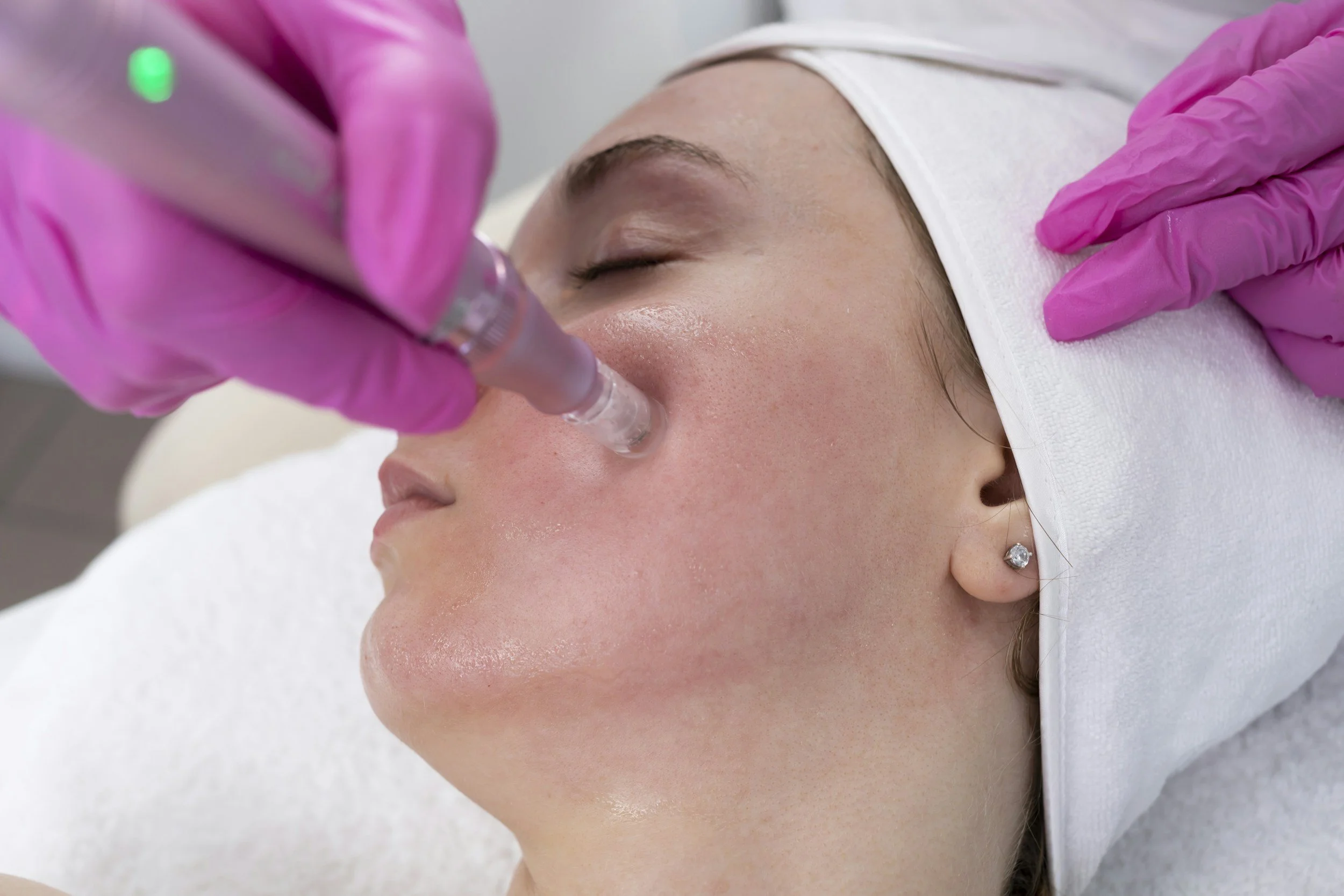
Facial treatments aren’t as intense or aggressive as what we discussed above, but there is a recovery period after a facial if it includes professional extractions, enzyme treatments, or other skin-renewing treatments like nano-needling.
When an esthetician treats and extracts debris from a pimple, the post-inflammatory effects still need to go through their healing process. When oil-controlling and bacteria-killing ingredients are used on deeper pimples, we still need to wait for them to take effect deep in the follicle. This means results come days after a facial that treats breakouts.
And treatments like enzymes and nano-needling stimulate energy and microcirculation in the skin cells and give great results for the skin the same day, but the true skin health and firming benefits come after the skin recovers days/weeks later.
Scrub me secret: when I lived in the Midwest, it was easier for me to make time for a chemical peel treatment or think about maybe getting a laser treatment in the future. Thats because it was cloudy for many months out of the year. Now, I live in Colorado, and it’s sunny ALL the time, so my skin won’t have the environment for proper recovery. So I haven’t gotten a chemical peel since moving here. I’ve never had a laser treatment, but I’m not sure when I would have the time to stay indoors and recover for days.

Some facial treatments provide results that you see and get that very same day! Not every treatment requires recovery.
The Bottom Line ⬇️
The biggest skincare mistake isn't always using the wrong product. Sometimes it's not giving the right product enough time to work. Or overusing the product/getting too many treatments in hopes of speeding up desired results.
Also, give your skin, your body, and yourself grace. Especially if you have experienced any kind of illness, large amounts of stress, or chronic inflammation. Realize that all skin, even healthy skin, takes time to repair. We can’t rush that process.
scrub me secret: Social media and certain before-and-after photos can create unrealistic expectations. Sometimes we can get tricked into the idea that every product and every treatment yields instant results. Sometimes products take a long time to work, or skin takes some time to heal and repair properly after a treatment. And thats normal but not often shared on social media.
It’s tempting to switch products after only a week or two, but as long as you aren’t experiencing new pimples, small bumps, very red skin, or any other negative changes in your skin, you should continue to use your curated skincare for at least 6 weeks because it may take that long to start seeing the results that you desire. Ideally, you’ll have a skincare routine that a skincare professional helped you craft for yourself. And if you don’t have an esthetician, I can be yours virtually or here in person in Colorado.
Would love to know your thoughts or comments!
**I am not a doctor, and none of these statements are meant to diagnose or treat illnesses or medical conditions. These are my thoughts as an esthetician and skincare expert.